Thursday, April 30, 2020

Megamusicals - Fun Spectacle Or Commercial Pap?

At the moment, I'm in one of those particular moods in which I get utterly fixated on something and then go completely into depth on it, even if it's something that I'm normally not engaged in otherwise. For some reason, possibly because of researching the original Cats to compare it with the abysmal film adaptation, I recently became fascinated by megamusicals.

These are a particularly controversial type of musical. Critics who dislike them accuse them of being "McMusicals", only being released to gain as much profit as usual and establish franchises. However, they have been hugely successful with audiences over the years, often gaining big fandoms and becoming ingrained as part of pop culture and memes.

This article's main aim will be to explore the brief history of the megamusical genre, both its format in the 1980s and its format in the 21st century. Its main traits will be identified and I will state my overall opinion of them at the end. I will also identify examples that match the genre's requirements and discuss the highs and lows.


The 1980s - The Beginning

Most people agree that it was Andrew Lloyd Webber who first made megamusicals a thing. He had a few hit musicals such as Joseph And The Amazing Technicolour Dreamcoat (1968) and Jesus Christ Superstar (1971) in the seventies that had some megamusical traits, but it was Cats (1981) that ultimately codified the traits that would be associated with them. He would then really made a name for himself with The Phantom of the Opera (1986), based on the Gaston Leroux gothic novel of the same name. These megamusicals would define the format associated with them at the time.

Most eighties megamusicals tend to be sung-through with maybe a few spoken lines every now and then. The sets are big, the casts are big (often focusing on an ensemble cast rather than a single protagonist) and the costumes stand out big time. Often there will be a story that explores certain universal themes, but it lacks a lot of depth and is only a minor feature when compared to the spectacle. The music is very catchy and consists of modern pop and rock songs, often including power ballads and big orchestrations. Commercially, they will be very successful and popular with audiences, though critics will be more mixed about them.

To explain these points in further detail, I will be briefly analysing Starlight Express (1984), the megamusical Lloyd Webster very loosely based on Thomas The Tank Engine. Whilst it is not as famous as Lloyd Webber's other works such as Cats and Phantom, it's still pretty enjoyable and it puts these aspects to good use.
  1. Major focus on spectacle and visuals? Check. The musical is performed on rollerskates and there are train tracks designed to go around the audience so that actors can skate around them. It's a very immersive experience to say the least. Additionally, the costumes themselves look really nice and accurately portray the trains that they are imitating as well as the character's personalities.
  2. Storyline that explores universal themes but is only second nature to the spectacle? Check. The main plotline is about a steam train called Rusty who wants to win the big race and impress the aloof Pearl, but must compete against the bullying diesel engine Greaseball (who is essentially Elvis as a train) and the arrogant electric train Electra (very apt). It's essentially the classic underdog story that we all know about and explores the idea of not giving up on your dreams and having more confidence in yourself, so not anything new here (of course, maybe the fact that it's applied to trains could be classified as original).
  3. Large ensemble cast? Check. Though Rusty is the main protagonist, there's quite a lot of focus on other characters and their own subplots as well, such as Pearl's search for her ideal partner,  Greaseball and Electra's rivalry and the dining car Dinah's turbulent relationship with and undying devotion for Greaseball. There are also groups of similar characters such as the National Trains and the Rockies who don't have single members stand out, but they are still memorable as groups.
  4. Soundtrack with catchy pop songs and power ballads? Check. For example, Greaseball is inspired by Elvis Presley and Electra gets a song called "AC/DC" as a reference to the famous Australian rock band.
  5. Does very well commercially? I'll definitely say check on this one. It's had a decent run in the West End, and then there's Germany's obsession with it. Not only is it the longest running musical in Germany so far, but they even made their own theatre specifically to put on that show. Complete with the classic train tracks around the audience for crying out loud! And family events that are held backstage too!
I mean, LOOK AT IT! And that's just the standing ovation we're looking at here! (Note: This was a 2018 production of Starlight Express at the Starlight Express Theatre in Bochum, Germany.)

Starlight Express is an interesting megamusical. Sure, the plot has some weird themes and messages (seriously, steam engines being more efficient than diesel or electric?) and Pearl is a complete bitch at times. But it's fun and engaging with a brilliant set, lavish costumes, catchy music and memorable characters, and I was rooting for Rusty throughout that show the whole time.

I'd also like to point out that the spectacle of Starlight Express is partly the reason why this would not work as a movie. Not only would there be a loss of audience immersion, but the way that the characters are portrayed onstage means that it would be hard to find a way to properly depict them on the silver screen. Keep them in costumes and on roller-skates, and it just looks like people in costumes and on roller-skates. Turn them into actual trains, and it loses the dancing from the original show (unless they tried to have dancing trains, and that would just look stupid). The best they could possibly do is try and go for the Chicago film root of showing them as trains in "reality" and as people during the "fantasy" segments, but that would just get confusing quickly, even if the events of the show are implied to be in the head of a young train fanatic.

Sometimes, some of the megamusicals such as Phantom, Les Misérables and Miss Saigon do have serious stories that play an important role in the show. But the spectacle is still grand and the script is still sung-through. For instance, Phantom has the famous chandelier scene, Les Mis had the turning stage (which was sadly removed from recent productions) and Miss Saigon has the helicopter.

This format doesn't really get used much anymore. Blame is usually placed on the Broadway failure of Lloyd-Webber's Aspects of Love, but that wasn't actually a megamusical in the first place - it was just advertised as one despite being more of a soap opera. The most recent users of this format are the critically-reviled Love Never Dies (the Phantom sequel that we never asked for) and the critically and commercially successful Hamilton. Hamilton plays around with the format though - it's sung-through, features modern music, has a grand plot that focuses on themes of social justice and the rise of fall of the titular character and has impressive lighting, but it doesn't really have grand sets and scenery.


The 21st Century - The Highs And The Lows

The format of megamusicals changed in the 2000s, starting with the shows The Lion King (1997) and Wicked (2003). The sung-through format was mostly dropped and more spoken dialogue was used instead, and the plots started to have an equal role to the spectacle. The sets and costumes were still flashy though, such as the Indonesian puppetry in The Lion King and the dresses that Elphaba and Glinda wear in Wicked.

Keep in mind that The Lion King was not the first successful Disney megamusical. That would be the stage version of Beauty and the Beast, but that one barely had any success in the United Kingdom due to being seen as a "sentimentalised big-budget pantomine". Additionally, The Lion King and Wicked were what started the 21st century trend of adapting famous works for the stage and advertising them for families and tourists, similar to the megamusicals of the eighties.

Either way, Disney is a good example of the 21st century megamusical in action. Aside from the works I've just mentioned, they've also adapted Aladdin, Frozen, Mary Poppins and The Little Mermaid. Frequently, these musicals will use songs that were planned for the original films but never made it in for some reason, with the use of Jafar's song "Why Me?" in Aladdin being a good example. They also make changes to make the plot and characters work better onstage, such as when they turned the parrot Iago from Aladdin into a human. Nevertheless, the plots are still mostly faithful to the original stories and you can expect the same lavish scenery and costumes that they had in the films and other megamusicals.

Results vary each time. Disney is nearly always successful with their stage adaptations of their films (Britain seems to be the only exception of where they do well, and even then we like The Lion King), though reception to the Frozen stage adaptation has been more mixed. Wicked is also very successful and has fully integrated pop culture, up to the point in which it arguably overshadows the (much darker) book it was based on. The Shrek musical adaptation is more of a mixed bag - some people love it, some people hate it and some people like myself are in-between. But it still does well commercially, as indicated by the many times I've seen it promoted over in my home country.

Of course, sometimes it goes wrong. Like with the Spider-Man musical (2011). Yes, we all know it was a thing.

If by "famous", they mean the reputation it received for the turbulent production, the injuries the actors suffered on the set, the fact that its creator was fired and had her career killed, and the fact that it had numerous preview showings...yeah, I guess you're right in a sense.

The full title is actually Spider-Man: Turn Off The Dark, but I never got what the subtitle was supposed to mean. Besides, given the infamous reputation this musical gained for the injuries the actors suffered due to faulty wires and sets, other people were right to name it Spider-Man: Notify Next Of Kin instead.

What makes this particularly depressing is that the idea for it came from Julie Taymor, the same woman who brought us The Lion King musical. Due to her primadonna attitude on set and her bizarre ideas for Spider-Man, she was ultimately fired from the production. Still didn't stop it from flopping. It holds the world records for most previews shows for a musical, and I'm pretty sure that they could have outweighed the actual amount of shows that were put on when it finally had a proper release, had it not ultimately finished in 2014 instead.

The main problem with the Spider-Man musical, appalling safety conditions aside, is that it doesn't really bring anything new to the megamusical genre. Cats essentially popularised said genre in the first place. Starlight Express obviously had the roller-skates and the train tracks. The Lion King featured the Indonesian puppetry. Wicked was based on a much darker story that served as a retelling of The Wizard Of Oz and explored the backstory of the witches. The Spider-Man musical however...is just an adaptation of the comics and Sam Raimi movies. Even the stunts on the wires have been performed in other shows beforehand.


My Conclusive Thoughts

So my overall opinion on megamusicals? Well, as someone who's not a massive musical expert or fangirl, but shows an interest for them anyway, it ultimately depends on the production and the mood you're in. I desire a good story in a musical most of all, but I have a deep interest in spectacle too. The Lloyd-Webber ones are always fun to watch for instance (Love Never Dies being the only exception), even if the plots can be weak at times. The Disney ones can also be pretty good at times, though The Lion King is clearly the best.

I feel that in order for a megamusical to be successful, it has to be innovative. The spectacle has to be unique and it shouldn't take away from the emotional impact that it's supposed to have on the audience. I have a field day watching the roller-blade stunts in Starlight Express, admiring the puppets in The Lion King and witnessing the different musical styles in Cats, but the Spider-Man musical and Love Never Dies do nothing for me. We shouldn't have a massive glut of megamusicals, but it's nice to see one once in a while.

Wednesday, April 29, 2020

The Most Important Lesson To Take From The COVID-19 Quarantine

[Note: In case I accidentally come off as insensitive with this blog post, I would just like to start out by saying that I offer my deepest sympathies to those who have been affected by the ongoing coronavirus. I can't necessarily understand what it is certainly like, as I haven't had it yet, but I certainly understand how horrible the current situation is as well as the grief of those who have lost loved ones as a result. I am so sorry you have to go through this pain.]

I try not to talk much about the ongoing coronavirus pandemic on my blog posts, especially when we take into account the worldwide lock-down that has occurred as a result. It just doesn't help my mental state at all. I would prefer to just talk about stuff to look forward and stuff I like such as my obsession with Death Battle!, my excitement over the upcoming Jackbox Party Pack 7 and things that I'm normally not obsessed with but have taken a recent interest to.

However, it is important that I make reference to said quarantine anyway, as it strongly links with the argument I am making in this article. Obviously, we all know that the main important lesson about the pandemic is that some world leaders are just idiots, but we can't get political here. So here's the main message I would like to get out there.

We live in an extroverted society. With the possible exception of Scandinavia, most countries tend to pressure people into connecting more with others. They have to use social media, they have to attend the latest events, they have to have loads of friends. If you're an introvert or loner on the other hand, the main assumption is that you're some tragic freak who wears goth clothes and needs to be "cured" of your loneliness. After all, people are stronger when they're together, right? And why would you want to be cooped-up inside all day not doing anything "special"?

https://static.tvtropes.org/pmwiki/pub/images/xy_hex_maniac_5.png
A completely accurate and realistic depiction of an introvert...according to extroverts. (Note: Picture from Pokemon X And Y.)

It seems that most people have a bad case of FOMO (a.k.a. fear of missing out). It mainly involves feeling anxious about not being part of some major social event, such as parties, conventions or just hanging out with others in general. I guess the idea is that if you're not getting involved in these events on a day to day basis, you're not cool enough. So apparently people who prefer to have alone time are not cool either.

Of course, we can't do any of that at the moment. Conventions have been cancelled, theatres and cinemas have been shut down and other upcoming social events have had to be held off. Extroverts can't get outside the same way that they could before the lock-down. They now have to live the same lifestyle that they suspect that introverts do until everything opens up again.

I was talking to my mother about this a few weeks back when we were coming back from a walk. Her prediction is that some people who were originally extroverts could possibly become agoraphobics in response to the lock-down. Having spent several months cooped up inside their own houses and having to distance themselves from other people, they will likely be uneasy about going outside again and going near said people again.

Quite likely, some of those new agoraphobics will be ones who previous mocked other people for not being extroverted like they were. This obviously won't be the case with everyone, but it will be for some of them.

There is however a small solution to this. It may not help out in the long-term, but it can help you feel better in the short term.

The opposite of FOMO is JOMO (a.k.a. joy of missing out), which was coined by the tech blogger Anil Dash (here's his blog here - it has some really interesting stuff about technology and mental health). Essentially, it's about having time to yourself and mindfulness, in contrast to worrying about trying to stay connected. As an ambivert (a cross between an extrovert and an introvert), I've taken on this philosophy myself and let me tell you, it works wonders. I still keep in contact with friends and family, but I don't feel forced to "catch up" with what's "hot" at the moment.

So here's my advice. Try to take some time to yourself for once. Try not to get too fussed up about events you may be missing out on. You can still find ways to keep in contact with others if you want to, but don't let it pressure you. Good friends will acknowledge that we all need our alone time at some point. Find some stuff you can do by yourself such as reading some good books, drawing or watching online videos. Additionally, find some good films or TV programmes that you can enjoy by yourself, or some good video games. If you are able to get out of the house as well, try and visit someplace like the woods where you can get some private time to yourself, possibly to meditate and think about more positive things. Hopefully, this takes away all of the stress of not being able to connect with others as easily.

Most importantly of all, I hope this makes us all understand the situation of introverts better. May it make us realise that we shouldn't be mocking introverts for the lifestyles they lead, and instead we should be more considerate as to why they may be like that, as well as how they're not that different from others as a whole. There's nothing wrong with being extroverted at all, but please understand that there's nothing wrong with being an introvert either. Or an ambivert for that matter.

Saturday, April 4, 2020

My Review Of The Jackbox Party Pack 2

The Jackbox Party Pack 2 poster.

Okay, now that Jackbox made their second announcement on the 2nd April, this is a good time to be posting this review. The game announced was The Devils and the Details - this was actually meant to be an April Fool's joke but as the trailer got posted a day afterwards, there is the chance that they may make this an actual game on the seventh party pack.

Either way, here's my review of the games from Party Pack 2!


Quiplash.


Alongside Cookie Masterson, Josh "Schmitty" Schmitstinstein (voiced by Phil Ridarelli) has also had a major role as a host in the You Don't Know Jack franchise, starting off with Television and then moving on to many more after that. He may not currently be hosting that particular series for the party packs, but he gets to return to the spotlight in what is definitely the key game of Party Pack 2.

The premise is that you are given a prompt that you must write down an answer to, and your answer will then be pitted up against someone else's. Everyone else then votes on which answer they like the best or they feel is the funniest. You get points based on how many people vote for your answer, but you receive a bonus if you win the most points, and an even bigger one if you "QUIPLASH!" the other player by receiving all of the votes in a game with a large amount of players.

There's a reason why this game is my favourite one of of this party pack. Not only is it an extremely colourful game with really cute characters in it, but this one gets really crazy with the prompts and answers you can receive. Whether's it asking you to come up with an alternative substitute for toilet roll, the secret to a happy life or a terrible name for a 1930s gangster, the only limit to your answers is your imagination. It's all in good fun.

...Well, most of the time anyway. (Note: Screenshot taken from Achievement Hunter's first playthrough of the game, which can be seen here. Somehow, the audience voted for the second option, which explains the orange guy's victory.)

My favourite part of this game though is the Back Talk achievement. If you write down a particular answer to a question (e.g. answering "Something you'd most love to smash with a wrecking ball" with "Miley Cyrus"), Schmitty always has a witty comment in response, allowing Ridarelli to really show off his acting chops in the process. Just be careful answering "The world's most boring video game" prompt though. He will certainly not be happy if you put down a particular answer there (no spoilers, though!). X)


Fibbage 2.


Cookie Masterson is back for this sequel with the same sardonic humour he had in the first game. I won't delve too much into this game, as it's essentially the same premise. However, I will talk about the new additions. For instance, the art style is even quirkier than before - for example, the player icons are now eyeballs and chameleons pop up on the correct answers. Giving this new aesthetic to the game really matches the game's personality itself.

A new feature is the "deFIBrillator", which allows a player to remove all the answers on their device except for one lie and the true answer. This is particularly useful on an extremely tricky question with similar sounding answers, but the fact that you must still choose between the two remaining options means that it isn't a cheap cop-out. Overall, a satisfying sequel to what was already a fun game - and it finds ways to improve on it too.


Earwax.


A very quirky and fun game that takes a seemingly ridiculous premise and then actually makes it work. In this game, players must find two sounds that match a particular prompt. One person is selected to be the judge for a particular round, and they must choose which sound they like the best in said round. People can vote on the sounds they like the best and whilst it does not actually choose the winner, it could potentially influence the judge's decision. The first person to win three rounds wins.

The host is the robotic-sounding M.O.T.H.E.R. (I didn't see the voice actor's name in the credits, but I know from other Jackbox sources that it was Ryan DiGiorgi), who is mostly very chipper and helps add to the game's wacky tone. Additionally, there are many different sounds to choose from, ranging from "All hail the king!" to explosions, meaning that your choices aren't limited when it's time to pick your two sounds. Pairing the answers up with some interesting prompts, you're bound to get some wild results.

Just a warning though. Most of the voice clips are family-friendly, but a few of of them essentially consist of orgasms that get very intense. Remember to keep that in mind when playing with younger players - hopefully you managed to find a way to censor said options before starting. Otherwise, you're safe to go!


Bidiots.

Now this is an interesting one to discuss. The premise of the game is that you must bid on each other's artwork in hopes of making a profit. On your device, you will be told which pieces of artwork you should be bidding on and the price that you should be aiming for. If you lose money on a bad purchase or sale (or worst of all, somehow buying your own artwork - yes, this can happen), you have an option to take out a predatory loan (which comes with a very catchy theme song everytime). However, said loans will be taken back at the end of the game. Another option is to "screw" someone into bidding on artwork they don't want, making them more likely to lose money on a bad purchase. Overall, the person who makes the most profit wins.

The rounds are pretty much the same, thus making gameplay repetitive (by this, I mean that each round is just bidding on artwork and then taking a loan). Additionally, audience participation is not possible for some reason and the screw function can break the game if you can't find somebody to use it on. Nevertheless, it's still pretty entertaining. The gameplay gets very hectic at times given its nature, which I always enjoy in a party game like this. The noises that the bidders make when trying to win the artwork are also priceless, especially when they occur within seconds of each other. Additionally, there's a fun little easter egg where if you type in your player name at the beginning, you can sometimes get a special place-card associated with said name rather than the regular ones. I won't spoil the results you can get, but definitely try it out.

In particular, I would like to discuss the host of this game, because he is utterly hilarious. He is voiced by Tim Sniffen, who has worked with Jackbox games for a long time and is both a talented voice actor and comedian (he also voices Donny in YJKJ 2011, the green room organiser who loves to use long complicated words that he doesn't understand). The posh voice he puts on is priceless and it's especially funny to hear his exasperation whenever the loan sharks come by. And I never get tired of the way he announces the different prices as well. It cracks me up every time. X)


Bomb Corp.

This is Jackbox's own take on the bomb-defusing game genre, similar to ones such as Keep Talking And Nobody Explodes. The premise is that you are working as a bomb-defuser, with your boss Greg (voiced by Matt Young) guiding you through. Most of the gameplay consists of you defusing the bombs that your new company makes, but there are other tasks such as organising folders (that also contain explosives) and clearing out your desk. So overall, not very different from a normal day job. ;)

Personally, I feel that this is the weakest of the Party Pack 2 games. It doesn't really stand out compared to the others and the amount of players that can take part is very limited in comparison to your regular Jackbox game, with audience participation also not being a feature. However, it's still pretty charming and the different tasks it offers you should keep you occupied - it's good that they don't go for the same tasks every time and choose to vary the rounds. Additionally, Greg adds some witty comments throughout gameplay that work well for the situation that you're in. Overall, it's a good game to play if you only want to play a solo game or with one friend.


Drawful 2.


Okay, for some reason this game does not appear to be on the party pack, which is why I placed it last. Like with the Fibbage 2 review, I'll just discuss the new features it brings to the series. The host is now voiced by Elizabeth Archer, but she still has a similar personality to the host from the first game, which is a nice touch. Another new feature is the chance to use not one, but two colours. This will definitely add something new to your pictures which could help out with particular prompts.

Add the new art design that stays faithful to the original game and there you have it - another satisfying sequel. Still confused as to why it isn't on the party pack though.


Overall, this pack has its ups and downs. A couple of the games aren't as memorable as the games on other party packs, but as it is Jackbox we're talking about here, even the weaker games have their charm. Additionally, Quiplash is an absolute joy, the game sequels add a lot to the original games and Earwax is great fun.

As soon as the third game gets announced, I will be posting my review for the third party pack. This one's a real treat, I tell you!

Friday, April 3, 2020

How Les Misérables Predicted The Main Problems With Cats: A Study In Film Flaws And Musical Adaptations

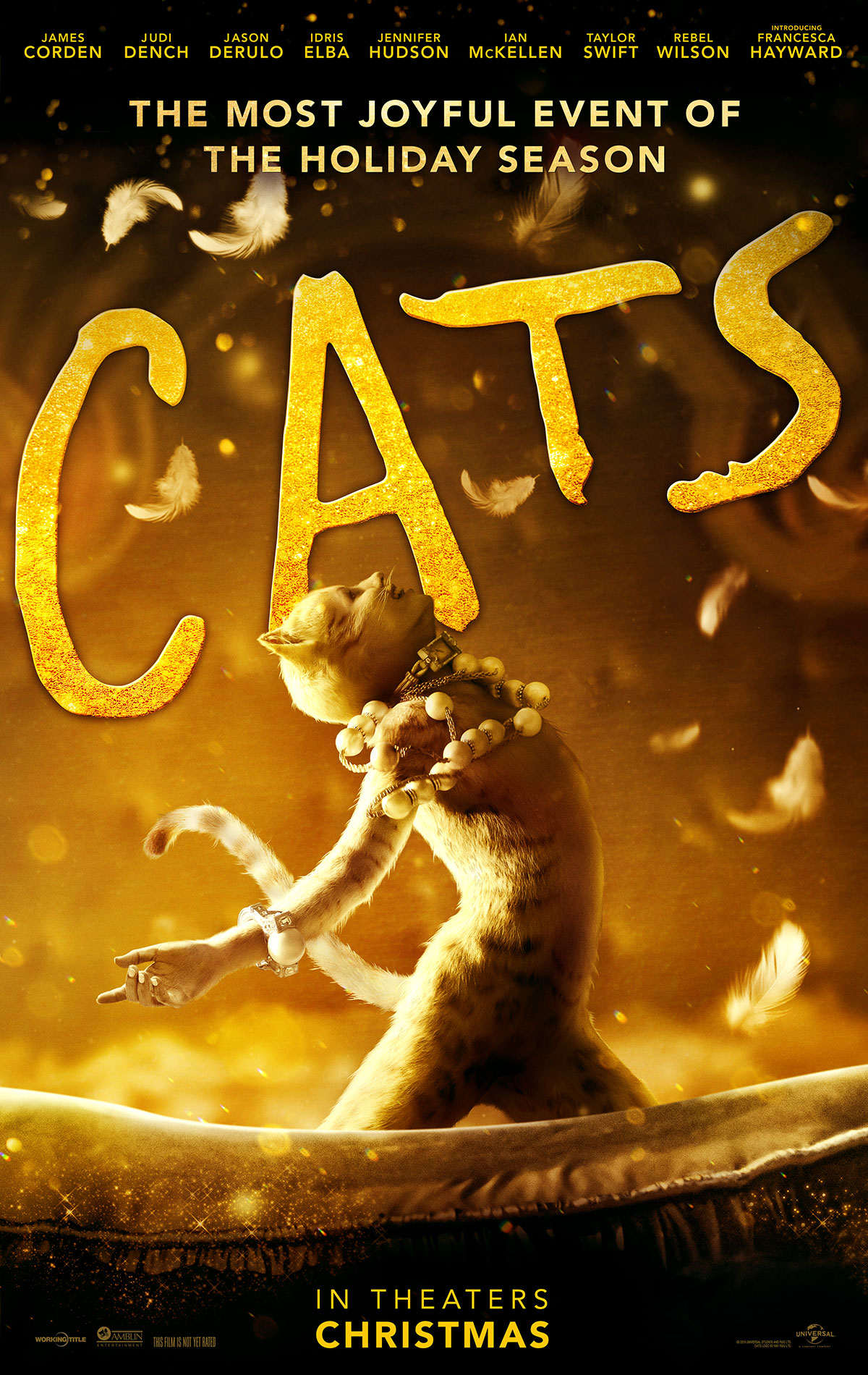
Cats | Universal Pictures
I mean, it's certainly joyful for those who like cinematic garbage.

So, the Cats movie adaptation was a thing. It got slated by almost everybody as soon as the first teasers dropped, received even more negative reviews as soon as it actually got released, it bombed at the box office big time, it got nominated for nine Razzies and won six of them, including Worst Picture. Everyone now remembers it for being one thing - a cautionary tale about how NOT to adapt a stage musical for the silver screen.

Most people agree that the director Tom Hooper is to blame. He was the one who came up with the idea of the cats being CGI humans, after all. Sure, the fact that the studio rushed Cats for a Christmas release made things worse, but it's likely that it would have still been a trainwreck even without factoring that in.

So exactly went wrong? How did one of the most beloved (if also polarising) musicals end up being turned into a cinematic abomination?

To find the answer, I'll be looking back at Les Misérables, another musical adaptation that Tom Hooper directed back in 2012. Despite winning several awards and doing much better at the box office than his recent venture, I feel that it contains what we identify as the "original sins" (a term used by TV Tropes) of his directory work.


So What Is A Franchise Original Sin?

I'm a massive fan of TV Tropes terms, and this is one of my favourite. The "franchise original sin" is defined as being an issue that started in previous works, but only became apparently and unbearable in later works. For example, Joss Whedon works such as Buffy The Vampire Slayer tended to have a strong female characters getting broken down by tragic events. Sometimes they weren't even action girls, but genuinely sweet girls such as Penny from Doctor Horrible's Sing-Along Blog (I highly recommend you check this one out, it's both hilarious and genuinely depressing at the same time). This was perfectly fine when it was just his own characters (it helps that in Doctor Horrible, the male protagonist became even more broken that Penny did), but people finally lost it when he tried to do the same to Black Widow (a character he did not create himself) in Avengers: Age Of Ultron. As a result, he now has a reputation for being someone with outdated views on feminism that originally seemed revolutionary in the nineties.

Now you may wonder why I chose Tom Hooper's musical adaptations for applying this term to. Well, first of all, it's something I've noticed being brought up in other online articles and videos and I wanted to expand on it further (especially since there isn't a TV Tropes article about it yet). Secondly, it's a topic that will still be relevant at the moment but will be outdated if I were to release this blog post later.

And thirdly, I was originally going to apply the term to the Ice Age films. But that would take up too many blog posts for now. So I'll deal with that later and stick with this for now.


Comparing The Films

So a bit about the Les Misérables movie. It is obviously based on the musical of the same name, which in turn was based on the novel by Victor Hugo. It tells both the story of a failed French uprising (which happened before the proper French revolution) and the story of Jean Valjean, a former crook who is trying to live a new life but is pursued by the determined Inspector Javert. It is what would be classified as a megamusical - it is entirely sung-through with barely any spoken lines, it has a grandiose stage set and a large cast and it makes a lot of money. To adapt something like that, Hooper had to make quite a few changes in order to make it better fit the feature film format.

encrypted-tbn3.gstatic.com/images?q=tbn:ANd9GcR...
The most iconic of the Les Mis movie posters.

When the film was released, it gained a worldwide gross of $441,809,770 ($148,809,770 domestically and $293,000,000 internationally) against a $61,000,000 budget. Not only did it snag the world record for the highest opening day gross for a musical film, but it also beat Mamma Mia! for the highest-grossing opening weekend for a musical film in the United Kingdom. It was nominated for many awards, most notably helping Anne Hathaway to win the Oscar, the BAFTA and the Golden Globe for Best Supporting Actress.

Les Misérables was a success, but it had its problems. People who disliked the movie criticised the bizarre use of cinematic techniques (the shaking cameras and close-ups were among some of the main issues) and some of the casting choices such as Russell Crowe's infamous stint as Inspector Javert. Now, I'm currently not a huge fan of Doug Walker (a.k.a. The Nostalgia Critic) and his works, especially after the whole "Channel Awful" controversy, but I have to admit that he does a very good review on the film that explores the main point about critical reactions - either people loved it or they hated it.

These issues would then carry onto Cats. Like Les Misérables, the cinematic techniques and special effects were absurd, and it was more intent on having as many famous actors and celebrities as possible without worrying about whether they would be well-suited for their roles or not. Sometimes, well-established characterisations of characters were altered in questionable ways just to reflect the personality of their actors more clearly. Many people even brought up the problems of Les Mis in order to further emphasise their criticisms of Cats. But unlike Les Mis, Cats would only dominate the Razzies rather than anything designed to show it a little bit of respect.

So what saved Les Misérables? Simple. A combination of some genuinely brilliant actors and the lack of crappy CGI, as well as source material with a strong plotline.


The casting.

To go in depth on casting, many of the stars of Les Mis are recognisable actors such as Hugh Jackman, Amanda Seyfried and the previously mentioned Hathaway and Crowe. And whilst some of them have experience in musical theatre, some of them don't. With Crowe, he only had experience in folk rock. I also did some quick research on the casting choices and although the brilliant Samantha Barks ultimately got the role of Éponine, two of the stars being considered for the role included Miley Cyrus and Taylor Swift (though the latter went on to be in Cats).

Taking the final cast and the original casting choices into accounts, it's clear to me that there was more concern for big names that people could "relate" to than actors who had musical theatre experience. But aside from Crowe, most of us were willing to push that flaw aside. Jackman and Barks were highly praised, along with newcomer Eddie Redmayne, and Hathaway stole the show with her award-bait performance as the fallen woman Fantine.

Even if we were to remove the crappy CGI from Cats, none of the performances in the latter film are truly Oscar-worthy. Sure, plenty of the actors seemed to be having a fun time and apparently wanted to do this for a while (Swift really hams it up and steals the show as Bombularina despite said character having her characterisation butchered), but that's about it. And even if there was potential for an award-bait performance, the CGI makes it harder to notice, as we're too focused on that and the faces are covered up by that weird fur stuff.

And then there was the casting of Rebel Wilson as Jennyanydots, which was hated by even the most die-hard defenders of the film. Her crude stage personality did not fit the character well and quite rightly. This isn't anything new though. In Les Mis, Sacha Baron-Cohen and Helena Bonham-Carter are cast are the wily Thénardiers, and their quirky and risque stage personalities are associated with the characters. Most notably is the moment when Monsieur Thénardier steals money from a man dressed as Santa Claus being humped by a prostitute, a scene curiously described in the Nostalgia Critic review as "Santa rape". I have looked up to see if that scene was in the original show - apparently it wasn't.

Best Santa Clip Art #22040 (With images) | Merry christmas ...
And if you expect me to post a picture of the offending scene...urgh, you really disgust me.

The Thénardiers are nasty pieces of work anyway. They swindle people out of money and mistreat Cosette when she's a child. Plus, they were always a twisted form of comic relief anyway. So that weird sex scene can be somewhat forgiven, especially since the Thénardiers weren't the ones having sex with Santa themselves. But Jennyanydots is a motherly if stern matron who teaches mice and cockroaches to improve their habits. With Wilson playing her, she becomes a more ghastly figure who tortures them rather than looks after them. It is her alone who strips off her fur to reveal a tacky dance outfit similar to ones from the 1940s underneath it, her alone who eats the cockroaches that happen to have kid's faces CGI-imposed on to them.

The same goes with the Bustopher Jones segment, where he gets played by James Corden. Bustopher is meant to be a high-class cat with refined manners and taste...and yet in his segment, the cats are eating from rubbish bins. Um, I'm sorry, does that scream "high-class" to you? I don't think so.

The worst part of the Bustopher segment is that Corden only uses that stage persona for the crappy films he appears in. When he's doing television in Britain, such as on Gavin & Stacy and The Wrong Mans, he doesn't have that particular image. Makes you wonder why it changes for the big screen.


The plots.

Another notable difference between both films was the story that they adapted. The original musicals are part of the "megamusical" genre, which features musicals with entirely sung dialogue and impressive spectacle. Sometimes in megamusicals, the plot is only given secondary focus so that the audiences can focus on the music and technology instead. However, due to the original Les Mis being based on a novel rich with plot and characterisation, this was not a problem at all. With musicals like that, all that needs to be done for the silver screen is maybe some expansion on the plot (possibly even adding spoken dialogue if necessary) and the adaptation's good to go.

With the original Cats however, that musical was based on Old Possum's Book Of Practical Cats by T.S. Eliot, a selection of poems that only linked together due to the theme of cats in them and some minor references characters from other poems. The plot itself is simply about members of the Jellicle tribe trying to get a chance to go of a journey to the "Heaviside Layer" and be reincarnated, even though it seems that many of the cats (excluding Grizabella and Gus) are still young and healthy and could possibly do with sticking around a bit more. The plot itself is not that much in depth and some people have come up with some interesting interpretations of it (my favourite one possibly being that the cats are all dead and in the afterlife anyway). Consequently, trying to expand upon it resulted in new issues, such as trying to expand the role of the very minor character Victoria and have her replace the more prominent Jemina, and turning the sexually-confident yet ultimately well-meaning Bombularina into a devious supporter of the villain Macavity (um, slut-shaming much?).


Summing It All Up

I think by now I've summed up what I feel were the main comparisons with both films. They're adapted from sung-through megamusicals that may or may not work better onstage, they feature all-star casts involving actors that may or may not be suited for the characters they have been assigned for. But in general, Les Mis is at least able to distract us from some of those flaws with its good points, something that Cats was unable to do.

Overall, this just goes to reveal Hooper's biggest flaw. He has several grandiose and ambitious ideas for adapting musicals, but he doesn't know how to put them to proper use. Cats just made said flaw more obvious.

Think of Cats as the inverse Springtime For Hitler from the comedy classic The Producers. With the latter, the titular characters try and put on the worst show possible with an offensive script and terrible actors, but ultimately they create an accidental success that is seen as a satire of the Nazi regime. With Cats, it's the opposite. Hooper clearly thought that he had found the "perfect" special effects and the "perfect " cast for a film based on a well-loved musical, but combined together, they ended up creating an absolute trainwreck.

Looking back, it's easy to track down Hooper's decline in cinema. He had massive success with The King's Speech, did okay with Les Mis and The Danish Girl and then sucked with Cats. He could potentially have a comeback if he does a better film afterwards, but given the points that I've brought up, it's unlikely that he will completely be able to cover up the flaws in his film-making style again. Which is not a completely bad thing, but it's still something to keep in mind.


[10th April UPDATE: Coincidentally at the same time that I uploaded this article, online reviewer Lindsay Ellis uploaded the video "Why Cats?" that brings up some of the same points that I do. I did not know this until the 9th April, and I am so happy that she has explored this topic as well. This one actually goes further into the analysis of "Oscar-bait" musical adaptations such as their origins. Seriously, she does really good videos and I've feel they're gotten even better over the years, especially with the increasing emphasis on film theory and analysing details. I'll put the link here so that you can check it out - it's a really interesting analysis and a fun one too. Remember to check out her other videos as well. ;)]

https://www.youtube.com/watch?v=G6iqAip-ZNo

Thursday, March 19, 2020

My Review Of The Jackbox Party Pack 1

The Jackbox Party Pack 1 poster.

Every year, Jackbox Games releases a party pack with around five different games on it, varying from quiz games to drawing games to general party games. These are massive on websites such as Twitch and I've seen many people on YouTube such as Achievement Hunter play them too. And each time, I find myself enjoying them more and more. I mean, what's not to love about them? They're funny, entertaining and varied, and I always enjoy listening to the hosts of each game talk as well.

By now, they've already released six of them. And they'll be releasing the seventh one this year, with Quiplash 3 already announced earlier this month.

So I thought that to celebrate the upcoming Party Pack 7, despite the fact that we have to wait until October for it to be fully released, I will post some quick reviews of every single game in each previous Party Pack, with each pack being reviewed as soon as a new game announcement for the upcoming one comes out. The majority of these reviews will be very positive - some may be a bit mixed and one review will be somewhat negative. But most of them will be glowing reviews. That's how enjoyable I find the games to be.

Okay! Time to start with Party Pack 1! :D


You Don't Know Jack 2015.


This is definitely my favourite one of the pack. You Don't Know Jack is pretty much the flagship franchise of Jackbox games (it's how they got their current name!) and this is just one of the latest installments. Fan favourite Cookie Masterson (as voiced by Tom Gottlieb, a longtime Jackbox games member) hosts this game, presented as someone who has already given up on the bullshit going on around him, including incompetent interns, a manic ventriloquist dummy who loves to troll him at every opportunity and an elderly stagehand (known by others as Old Man and voiced by Jackbox's music composer Andy Poland) who's always forgetting something and frequently screws things up for Cookie. And yet the show must go on, so he presses on with his job anyway, albeit with a sarcastic and jaded personality that we can't help but love anyway.

Rather than straightforward questions, the YDKJ games tend to ask rather ridiculous ones that require you to think outside the box, usually giving a "what if?" scenario. This game is no exception, and it brings back classic rounds such as "Dis Or Dat?" and the notorious "Jack Attack" final round, as well as new ones such as "Foggy Facts With Old Man" (where the forgetful Old Man describes something and you have to help him remember what it was) and "Kangaroo, Peanut, Einstein Or Uranus?" (where these are the answers provided to different questions).

As a sequel to the YDKJ reboot from 2011, it follows the same "choose an episode" format along with the "wrong answers of the game", which are sponsored by outrageous products such as the Vegan Cannibal Supply Company. Whilst I'm slightly disappointed that they weren't able to bring back "Nocturnal Admissions" (which is dream-themed) to this game, I love the new rounds that they have on offer. Cooke may not enjoy his hosting duties, but we can easily enjoy this game.


Fibbage.

The logo for the extra-large version.

Turns out that Cookie Masterson is so popular with Jackbox fans that they had to have him twice in the pack! He does the same deadpan delivery we know and love, though this quiz game takes a different route. In Fibbage, you have to guess the answers to questions about strange world facts, but everyone has to write down a fake answer as well. If people accidentally choose your fake answer, you gain points, with the score increasing the more people you trick.

This quirky game premise also comes with a quirky art design which matches it well. It's recommended when playing that, like with Jack Pattillo from Achievement Hunter, you try and make your answers both normal and strange, so that more people will be duped. Overall, very fun and entertaining.


Drawful.


Drawful may appear to have a similar format to Fibbage at first, with players also writing fake answers to deceive other players, but it takes it in a more artistic direction. Players are given a prompt which they much draw a representation of (such as "nightmare fuel"), and then other players must guess what said prompt was.

My older brother loves this game, and the same goes for me too. I've always liked drawing so that's already a plus in my opinion, but some of the prompts get really crazy and that adds even more charm to it. The best ones are the ones that are so absurd and literal that everyone gets confused by them, though you'll be wanting other players to guess the correct prompt for your picture if you want to earn points yourself. Add a somewhat sarcastic but still warm and friendly host (voiced by Catherine Rich) and you'll definitely be having fun with this game.


Lie Swatter.


Now this is a curious one. The premise is that you are given statements, each from different categories in the first two rounds and all from the same category in the final round, and you have to guess whether they are true or false. Now audience participation can be fickle on this one. This game offers the most placements for players (100 places), but only a small amount of people can actually join the audience and play along, otherwise the game can crash. Additionally, people watching can't necessarily be sure about whether you got your answers in on time as the only signal for that is a counter at the top left corner of the screen. Compared to the first three games, it doesn't stand out too much.

However, there are some perks about Lie Swatter. The facts and lies are genuinely engaging and crazy, and it will give you more facts on a particular statement if it turns out to be true. The host is voiced by Phil Ridarelli, who has worked with Jackbox many times in the past and does an amazing job with his delivery in this game, very formal and straight-to-the-point. The art design is also good - the flies look genuinely cute and wacky, though I do feel sorry for them when they get swatted (luckily, they will come back to life if the statement was true). Overall, a pretty charming and simple game that has its flaws, but is able to make up for them in several ways.

Just a quick comment on the host though. I know some sources believe that Josh "Schmitty" Schmitstinstein from the past You Don't Know Jack games and Quiplash hosted this one, and I believed so too. Watching the "Phil Ridarelli And #IDARB" livestream that Jackbox held to celebrate the game's release though, I found that this wasn't the case. Ridarelli actually based the host on a newsreader character that he portrayed in some of the parody commercials in You Don't Know Jack. I assume this means that the host of Lie Swatter therefore is the fly in the top hat that appears on the main menu screen and before the final round. Doesn't matter. Ridarelli's just as brilliant at the job as he always is. :)


Word Spud.


Now this is the game I was warning you about when I said that they'd be one negative game review coming up. The one game that Jackbox mocks when it looks back on it. The premise is that a word will come up and you must find a way to expand on it, with other players voting on whether they think you came up with a good response or not. For example, if the word "hit" comes up, you can respond by making it into "hitman" or "hit and run".

I can see where the main problems are. For starters, unlike the other games that Jackbox releases, there is no host for this game. Additionally, the "spud" theme only pops up as one potato image in the corner of the screen. Otherwise, the background is simply grey and the design overall looks kinda of generic. And finally, the gameplay can get a bit repetitive after a while. The flaws of the game have gotten to the point that whenever Jackbox wants to make fun of one of their games in a later one, this is the one that they pick.

That said, it can still be very enjoyable depending on who you play it with, and the music is pretty good too. I'm very much of a word person myself and word games like these do appeal to me.


So overall, a pretty good party pack with three solid games, one decent game and one somewhat below-average game. As soon as the next game for Party Party 7 is announced (or if they decide to make another April Fool's Day video like they did last year), I'll write down reviews for the Party Pack 2 games. Geez, I'm already excited for Party Pack 7, and it's not even close to October! XD

Tuesday, March 17, 2020

The Winter Blues...And How To Beat Them (Possibly)


Well, it's coming up to the end of Winter and I'm already hyped for Spring. Finally, I'll be able to fully break out of what I know as the winter blues.


A Dump Month Of Emotions

To explain the full context, I suffer from mental health issues such as anxiety from time to time. Not social anxiety (I'm perfectly fine in most social situations), but just anxiety and stress in general. Most of the time, I'm able to keep this under control by getting the support I need and making sure I stick to a particular schedule that makes me feel comfortable.

Not in the winter season apparently. Then it just goes into full-on borderline depression.

January-March is not just a dump month for movies, it's also a dump month for emotions. Similar to how Summer is a time for blockbusters and October-December is a time for holiday films and award bait, Summer also seems to be a time for going on holiday and not having to go to school, university or sometimes work, whilst October-December is a time for looking forward to all of the winter celebrations. However, between January and March, unless it's a Valentine's Day flick, you can mostly expect nothing but box-office garbage from the cinemas. The same goes for my mood. Instead of having something fun to look forward to like in the other months, people in my situation are just left wishing that Spring would come already.

The coronavirus was not an issue for me (or at least it wasn't until they started shutting everything down). That was actually one of the "less" depressing bits of news I found out about, and I feel I'm doing a good job avoiding it so far. But I still ended up feeling sick anyway.  It was one thing to get several colds in a row, but then I started becoming a full-on hypochondriac who kept on freaking out over every little "symptom" that I had. Yep, hypochondria is something I get when I'm really stressed, and it sucks.

Then there was all that political stuff going on in the news, which just left me feeling burned out. For example, whilst everyone else was at least able to make a few dark jokes about the conflict between the USA and Iran, I just kept panicking about the possibility of nuclear war and whether we were all going to die. I know that the whole debate calmed down after a while, but that wasn't the whole point in my opinion. The whole point was that I was getting way more stressed about this than I would have during another season.

So why does January-March seem like a miserable time? Especially when I feel that Summer is worst due to the ridiculously hot weather?


It's after Christmas and all of the other winter holidays.

December is a time for all of the winter celebrations - Christmas, Hanukkah, Diwali, Yule, Kwanzaa, etc. With those, at least you can distract yourself from any worries that you have and just try and have a good time (unless you have holiday depression, that is). Receiving presents, spending time with loved ones, seeing the nice decorations that the stores put up, completely different holiday activities...the list goes on.

Once the 6th January has gone though, it's all over. There's nothing much to celebrate anymore until later on, and even then most of these special days are spread out rather than close together. All that's left to think about now is having to get back to work and how to keep warm. Sure, they have the film award ceremonies, but I only show interest in a few of them.


It's the start of the year, and we want it to be over already.

It seems that all of super fun stuff happens later on. My birthday happens in May, big events such as the conventions are normally expected to take place in the summer (though E3 has been cancelled) and plenty of the games and series that we all look forward to don't start until springtime (fortunately, this was not the case with the seventh series/season of Death Battle!, which started at the end of January this year). As a result, the winter season feels longer than it actually is.


You're more vulnerable to disease during the winter.

It's probably to do with the cold weather when you think about it. The winter season seems to be when you're more likely to catch colds and similar diseases (I mean, that's why they have their name, right?). I mean, I caught a cold earlier this year and as soon as that appeared to be over, the next one came along. As a result, you feel more grotty and that makes you prone to being more miserable.


Beating The Blues

So how is it possible to stop these winter blues from happening? Well, unfortunately, it's not really possible to stop them completely. But I've found quite a few things help me out in order to lessen the impact.


1. Getting creative.

One of the things I really like to do when I'm stressed is to doodle or write up stories. Sometimes I can actually draw or write about what is bothering me and it helps me to get off my chest. Or I can just draw and write in order to distract myself and get my creative juices flowing. My favourite things to draw include the hosts of Death Battle! and my own interpretations of the hosts of Jackbox games (who we never really see but everyone has different ideas of what they look like). I also like to make progress on the story drafts that I've been planning, including a fan comic that I've been planning for some time. Now all I need to do about that is to find at least one illustrator.


2. Talking to someone.

One of the main problems I sometimes have is that I tend to want to avoid certain problems, which just causes them to stew up inside me. In that case, I end up having to talk about them to other people. Whilst it can be awkward at times (and sometimes very strong emotions are felt in the process), at least all of that stress has come out. And most of the time, whoever I've been speaking to is able to tell me that things aren't really as bad as they seem. My family and friends are good to talk to on some of these difficult subjects, as well as my psychologist and university mentors.


3. Getting outside and going somewhere.

Obviously this won't work for agoraphobics, in which case it's perfectly fine to stay indoors. For myself however, I find that getting out of the house not only gives me something to do, but also distracts me from my worries. Going to the shops, going for a walk in the countryside, going to a museum...these are just some of the places that I enjoy visiting.

And before anyone asks "But won't that put you at risk of getting the coronavirus?", I'd just like to point this out. Barely anybody else is outside at the moment due to the panic surrounding it. What does this mean for me? I get to have some peace and quiet either watching the wildlife in nature reserves or sitting down in a cafe drinking a warm hot chocolate.


4. Getting absorbed in favourite works.

This is a pretty obvious one for me. I love watching new Death Battle! episodes when they come out, and whilst there are still more to come throughout the year, there have been a pretty good mix of match-ups so far. It helps that the new schedule for the series means that a new Death Battle! episode comes out every two weeks rather than three like the episodes did originally, meaning that I don't have to wait so long for them. Those Video games are also a good way for me to relax - in my case, I like to play Yoshi's Woolly World for the 3DS, as it's bright, happy and soothing. It also means that I get to create my own Yoshis, something that unfortunately cannot be done on the Wii U version.

I don't just pay attention to digital media. I've been a massive bookworm since I was a kid and so I like to read books in my spare time as well. Graphic novels are one of my favourite mediums due to the pictures, but I also like to read picture books (they're not just for kids; there are some like the ones by Shaun Tan that are aimed for an older audience) and chapter books that also have pictures in them. Basically anything that's either for children or young adults - adult books can get a bit dull at times unless it's something that I'm really interested in. And as well as fiction, I like to read fact books and quiz books. With the latter in particular, this includes puzzle books such as Sudoku and Crosswords and personality test books. I've always enjoyed doing those personality tests, even if sometimes I end up with a result I don't always identify with. What can I say? I'm a real sucker for them. X)


5. Getting fit and healthy.

I really need to exercise more often. Not only will it be healthier for my lifestyle, but it really helps to get rid of all that stress. I recommend that you take up an exercise that you actually enjoy doing, as it will make it all the more worthwhile. For example, I love dancing and I frequently take part in zumba classes (for those who are unaware, it's a mixture between aerobics and Latin dancing). Best of all, I can do this inside my own house, which is handy when I'm unable to go out anywhere. Once you find a fitness regime you like, go for it! Just remember not to push yourself too hard though. That'll just make you feel worst.


6. Getting on with work.

Yes, I know that this doesn't sound very relaxing and some of us would rather avoid it. But here's the thing - it can actually distract you . For example, I recently had to do a "self-archive" project for coursework which involved discussing a set of items the same way that an archivist would. Besides the fact that it was actually a short project (only 1000 words!), I also got to comment on items that were personal to me and rediscover some of the creative projects that I did in the past. Coursework may be stressful at times, but for me it's less stressful than hearing the news of today.


Obviously, Spring will arrive on the 21st March and we're already getting signs of it such as the flowers coming up and the sun appearing more often. But I felt that it was important to write up this blog post as soon as possible so that anyone else who suffers the winter blues and doesn't know what to do about them could have some advice on how to feel better for the next few days, as well as when winter comes along again next year. I hope that you find these tips to be helpful in the same way that I did for myself, and hopefully things will look up once winter ends.

Reviewing The Golden Raspberry Awards 2020

Interesting that I chose this to be my first proper blog post, but this was the main reason why I released this blog at the time that I did. Of course, with the delays and cancellations of events that occurred throughout March, it left me more time to perfect some of the sections.

So I guess film award season has come to a close now. Obviously there were the Golden Globes, and then the BAFTAs. Oh, and then the Academy Awards/Oscars/We're Still Relevant For Christ's Sake, who for some reason are still trying to make themselves out to be the ultimate awards ceremony...for some reason. As usual, I didn't really get caught up the the hype for any of the award shows...

...Except for this one. I actually kept full track on it whilst nominations were being announced.

One of the many logos for the Razzie Awards.

The Golden Raspberry Awards, better known as the Razzies, skips out on celebrating the best movies and instead chooses to mock the worst movies. I frigging LOVE this award show. I always like to guess which films will get nominated and then afterwards which films will win. They're normally announced on the night before the Oscars, but since that moved to earlier this year, this'll probably be the last awards show to wrap out film award season. Unless another awards show also occurs afterwards.

For the first time, due to it being their 40th anniversary, the Razzies were meant to be televised for all to watch, but ultimately the coronavirus outbreak meant that it was just uploaded as a video on the 16th March. In all fairness, I would have be unable to watch it myself whilst it was airing due to only having Freeview and not anything like Sky or Virgin. Oh well, I guess you win some and you lose some.


My Overall Opinion Of The Event

For starters, I would like to say that I was content with the list of nominations this year. I feel that last year had a bit of a weaker lineup, as some of the "actors" who got nominated were political figures in documentaries who most likely got nominated for their controversial statuses. This meant that Fahrenheit 11/9 ended up snagging some nominations for "actors" despite actually getting some good critical press (though keep in mind that many other people may not agree, as director Michael Moore is indeed a controversial figure himself). This time however, the people nominated were indeed "acting" in the films. Well, maybe "acting" is a bit of a strong word considering the quality of said acting, but you get what I mean.

I would like to say that a lot of my predictions about the nominations were correct. Plenty of nominations for Cats obviously, but they also had The Haunting Of Sharon Tate, The Fanatic, Rambo: Last Blood and A Madea Family Funeral up there (they really hate the Madea franchise). To be more specific about Cats, I predicted almost every single nomination that would get, including Worst Picture and Worst Director. Same with the actor categories, though I didn't expect Judi Dench to be one of the nominees that time (though that was probably because of the CGI job they did on her - they said she looked more like the Cowardly Lion).

I will say though, there was one thing that annoyed me. For some reason in the Worst Supporting Actor category, Tyler Perry was nominated twice for two different characters in the same film. They never do this whenever an actor gets nominated for two different films - they classify it under the same nomination. Why couldn't they have done the same here? Then it would have meant that they could have nominated Jason Derulo for his miscasting as the Rum Tum Tugger in Cats and just his general arrogance towards the movie industry as a whole. I mean, he gets all pissy about people not liking the film and assumes that only other filmmakers have the right to comment, despite the fact that he's a singer by trade rather than an actor. On the bright side though, he did get nominated for worst screen combo with his "neutered CGI bulge".

Anyway, onto the actual "winners" of the categories!


Worst Picture - Cats.

It's certainly a "must-see" alright. I mean, how else are you supposed to find out how bad it is?

Of course this film was going to win this category. The whole thing was slammed when only the few few trailers came out, was considered to be a complete trainwreck when it actually came out and was one of the worst box office bombs of 2019. And it's not hard to see why - the CGI is appalling, the story makes no sense and makes bizarre changes to the musical that it was based on and the majority of the characters are completely miscast. When you're not laughing at the abysmal quality, you're getting pissed off about how one of the most beloved musicals of the eighties turned into...whatever this was.

I know that some people would have preferred The Haunting Of Sharon Tate to win because they said that Cats was at least enjoyable at times whilst Haunting was "exploitative". But here's the thing. If you win Worst Picture, you'll probably be remembered for a long time, for better AND for worst (mostly worst though). And we'd rather remember something that was spectacularly bad and chuckle-worthy than something that was just, well, bad. So whilst we'll be talking and laughing about Cats and its spectacular failure for years to come, Haunting will just be warming shelves in the nearby discount DVD store.


Worst Director - Tom Hooper for Cats.

This was Tom Hooper at the 2010 Toronto Film Festival after releasing critical darling The King's Speech. How times have changed.

Universal Studios may be at some fault for rushing Cats for a Christmas release, but the CGI's idea was Hooper's. Even when people complained about it, he still insisted that the idea of humans as weird cat/human hybrids was a good idea. Not only that, but he made some weird cinematic and storytelling choices for the film.

Hooper had his first breakthrough hit The King's Speech in 2010, which scored many award nominations and wins, and then moved on to the polarising yet still successful Les Misérables in 2012 and then afterwards another award nomination favourite The Danish Girl in 2015, which did receive one Oscar. Hopefully he can salvage his directing career at this point and gain back the prestige he once had, but we can't be too optimistic here.


Worst Lead Actor - John Travolta as Moose and Sam Munroe in The Fanatic and Trading Paint respectively.

With a performance like that, you'd next be expecting him to yell "WHERE'S RACHEL?!" (Note: Screenshot taken from The Fanatic.)

Travolta was just one of the two Razzie veterans to be nominated in this category, the other one being Sylvester Stallone for Rambo: Last Blood. Ultimately, the double insult of being nominated for two films rather than just one must have "helped" him win this award. The Fanatic was particularly disastrous, only being released in a few select cinemas (where it made a measly $3,153) before being sent straight to streaming platforms. Maybe they thought that they'd have more people watching it online.


Worst Lead Actress - Hilary Duff as Sharon Tate in The Haunting Of Sharon Tate.

Probably one of the least exploitative screenshots taken from the film.

Well if some people were so desperate for Haunting to win a Razzie, it certainly got one, even if it wasn't Worst Picture. Seriously, a former teen Disney idol as Roman Polanski's murdered wife? She may have the appearance but Duff certainly didn't have the acting skills needed. In a category that brought us Francesca Yates (as the white cat Victoria, who tends to spend a lot of time with her mouth gaping slightly open) and Tyler Perry (yet again nominated for his Madea role), Duff's performance was certainly a turd.

Fun fact about how I found out about Haunting: One of my university friends was super excited for Once Upon A Time In Hollywood and I decided to look up some more about to check whether it was worth her time (Answer: Yes, it certainly was). And then I discovered that it wasn't the first film about the Manson murders released in 2019. It was this film. Which bombed. Guess which film people actually liked in the end, and no, your first guess does not count.


Worst Supporting Actor - James Corden as Bustopher Jones in Cats.

There were some cats eating out of rubbish bins during his segment too, but you don't need to learn about that. Ew.

Yes, even in a film that brought us Jason Derulo as a character who was supposed to based on Mick Jagger rather than any R&B star, Corden ultimately took the "award" for this category. In due fairness, this was one of the few segments of the film that people did not enjoy - they made the mistake of trying to place Corden's film personality onto the character and it didn't work out.

The saddest thing about this is that Corden is actually a pretty good actor when he's not trying to put on that particular personality. He's been in many successful British comedy shows, he's doing very well with his talk show and most importantly in my opinion, he starred in The Wrong Mans, a brilliant parody of crime thrillers that my family loves. And yet most people remember him for the obnoxious characters he plays on the big screen. I think he should just stick to television in the future.


Worst Supporting Actress - Rebel Wilson as Jennyanydots in Cats.

And this is before she starts stripping off her fur and eating the human-faced cockroaches.

The Bustopher Jones segment actually comes off as relatively tame when compared to the Jennyanydots segment. Like with Corden, the same mistake was made of trying to incorporate Wilson's stage personality onto a character who was actually the complete opposite of that in the original musical. Except this one is actually worse. Some people may have enjoyed Cats and found it to be underrated, but even they didn't enjoy Wilson's scene.


Worst Screen Combo - Any two half-human, hair-feline hairballs in Cats.

Just a select few of the Cats cast grouped up for the same shot.

The Razzies always have fun with this category. Obviously you'll sometimes get the "normal" combos such as Jaden and Will Smith (albeit on Planet Nepotism according to the Razzies) in After Earth or Dakota Johnson and Jamie Dornan in Fifty Shades of Grey. And then you get the really silly ones such as Kirk Cameron and his ego in Saving Christmas or any actor paired up with a stupid outfit. Consequently, this has to be my favourite category of them all.

The cast of Cats ended up winning the award this time. Whether they mean the cast interacting with each other, the combination of the humans with the CGI or both, I'm not entirely sure, but seems good enough to me. Jason Derulo clearly counts in this field, though "neutered bulge" aside, some people seem to agree that he had one of the better CGI jobs in that film.


Worst Screenplay - Cats (screenplay by Lee Hall and Tom Hooper, based on the Andrew Lloyd Webber musical, which was based on T.S. Eliot's Old Possum's Book Of Practical Cats).

I mean, how do you actually get a picture of the screenplay? You might as well just watch it in general to learn more about it. But then again, maybe not.

Can I just point out that a musical like Cats doesn't actually work in feature-length film format? Hall and Hooper still went ahead with the attempt anyway, and what we get is a plotline even more confusing than the vague one that we had onstage. They also took the most sexually-confident character Bombalurina (who was one of the heroes in the original show) and turned her into a catty (no pun intended) henchwoman to Macavity, which, to me at least, is essentially a form of slut-shaming. If you ask me, the 1998 DVD version was perfectly fine - we could have just stuck with that if we wanted to see it on a screen.

Hopefully, this doesn't cause a second death in movie musicals like what happened in the late 20th century before Moulin Rouge! and Chicago brought them back into vogue in the early 21st century (though people who weren't into them in the first place will probably think otherwise), but the West Side Story remake comes out this year, so I think we'll see how that one goes before we properly decide.


Worst Prequel, Remake, Rip-Off Or Sequel - Rambo: Last Blood.

Now is he getting all dirty on that poster, or is that just down to Stallone's age?

Cats may have been a terrible remake of a famous stage show, but when placed into a category that featured sequels as well, it was ultimately let off. I remember seeing the poster for Rambo: Last Blood and already having a lack of faith in it. X-Men: Dark Phoenix sort of gets off the hook since a lot of the back publicity was due to it being the final X-Men film by 20th Century Fox, even if it did turn out to be awful anyway. I don't exactly know what saving grace this film could possibly have.

The problem with the Rambo franchise is that the original film First Blood was meant to be a criticism of the Vietnam War and a sophisticated character study of Rambo himself, who was simply a war veteran who wanted to get back home. The sequels on the other hand try to portray him as a straight-up action hero and focus more on the fight scenes and explosions. Overall, the first film sticks out like a sore thumb when compared to them - and is the only decent one of the bunch.


Razzie Redeemer Award - Eddie Murphy as Rudy Ray Moore in Dolomite Is My Name.

Eddie Murphy looking extremely dapper in his latest film.

Probably the only award that anyone wants to win, this goes out to anyone who has been nominated for or won Razzies in the past, but has recently done something that was actually good. This time it went out to Eddie Murphy, in what was probably the only category this time that most people didn't correctly predict. I was expecting Jennifer Lopez for Hustlers; everyone else expected Adam Sandler for Uncut Gems (though my mum did joke that maybe the Razzies just hate Sandler that much). Regardless, Murphy does a very good job in this film as Rudy Ray Moore, stand-up comic and blaxploitation actor, in a role that requires him to be funny as always but not to obnoxious extremes like in Norbit and The Nutty Professor 2: The Klumps. Overall, he ends up being the only true winner of any category, being the best rather than the worst.


Worst Reckless Disregard For Human Life And Public Property - Rambo: Last Blood.

JUST LOOK AT ALL THE FLAMES ON THAT POSTER THERE! And that's just one of the instances of property damage.

Now this is a new category that the Razzies introduced, similar to previous categories in the past such as "Worst Excuse For A Movie: All Concept, No Content" and "Most Eye-Gouging Use Of 3D" that didn't stay long but were still entertaining to find out the results for. Two films with a fresh rating on Rotten Tomatoes actually made it into this category, the first being Joker and the second being Dragged Across Concrete. Keep in mind that this is the only category that they both got nominated for.

Ultimately, that win went to Rambo: Last Blood, so Joker will not gain the honour of winning both an Oscar and a Razzie. Well, at least that film can argue that the violence in it was meant to "prove a point" about how society treats outsiders and why people become psychopaths in the first place. Rambo: Last Blood is just mindless all the way through.


So overall, most people's predictions were correct (with the Razzie Redeemer Award being the only exception), and the awards were well-deserved by their "winners". Certainly an improvement over last year with the "actor" nominations for political documentaries, even if the Razzies weren't able to have a normal ceremony this year.


So Why Do I Care?

Now you may be wandering: why are you getting so obsessed with all of this? Obviously there are other people out there who also get entertainment out of the Razzies, but placing bets on who win get nominated and who will win, as well as nitpicking every single aspect I liked and disliked?

Well, there are two reasons why. The first is essentially what the TV Tropes website defines as "bile fascination", or just taking an interest in the shitty. I know that these films are horrible (though some may disagree) and that I shouldn't be wasting my time watching them, but something makes me want to learn more about them. To find out if they are really as bad as people say they are. And if they're not that bad, well, I won't be unhappy with the results. In contrast, if people say that something is supposed to be really good and I find out that it isn't...well, I'm gonna be very disappointed indeed.

And now for the second and most important reason in my personal opinion. With a lot of major film awards such as the Oscars, the Golden Globes and the BAFTAs, there appears to be a select idea of what is a good film and what isn't. Which is fine if you're into serious historical dramas and biopics, but not so fine if you prefer stuff like the Deadpool films and the Three Flavours Cornetto trilogy (which are all amazing, but not films that the Oscars go for). People have different tastes when it comes to films that they like, and only one taste gets catered to at these film awards.

With the Razzies however? It doesn't matter. If it's shit, it'll get nominated. Mindless blockbusters, failed Oscar-bait, you name it. Whilst some people may think that some of these films are actually good (I mean, why do you think Adam Sandler still had a career?), it's easier to agree on a bad film than a good film.

And I mean, come on! The people at the Razzies clearly have a fun time with what they do. They've dressed up in crazy outfits, they've done parody musical numbers - they always seem like they've having such a good time with what they do, unlike the Oscars who seem to try and stay "relevant" as much as possible.


Anyway, that's it for my review of the Razzies this year. Hopefully they'll be able to televise the awards next year to make up for the coronavirus this year, but for now, we can all point and laugh at the unlucky nominees from this year (as well as debate over whether Cats is an enjoyable trainwreck or just a trainwreck). And who knows? I'll probably do a review again then. I certainly had fun doing this one.